


A view of The Hungry Caterpillar challenge.
Bamboo, with its flexibility and strength-to-weight ratio (making it as robust as metal in pressure), is considered one of many most interesting supplies for building. Apoorva Shroff had this in thoughts when she began The Hungry Caterpillar at Ashoka College. The challenge encompasses a meals road designed with 3D-printed modular kitchens that scale back waste, recycled plastic furnishings, and bamboo canopies impressed by nature’s geometry.
An acclaimed Indian architect with over 20 years of expertise throughout the U.S. and Asia, Shroff launched her personal agency, Lyth, in 2022, whereas additionally mentoring at Mumbai’s BSSA. Edited excerpts from an interview:
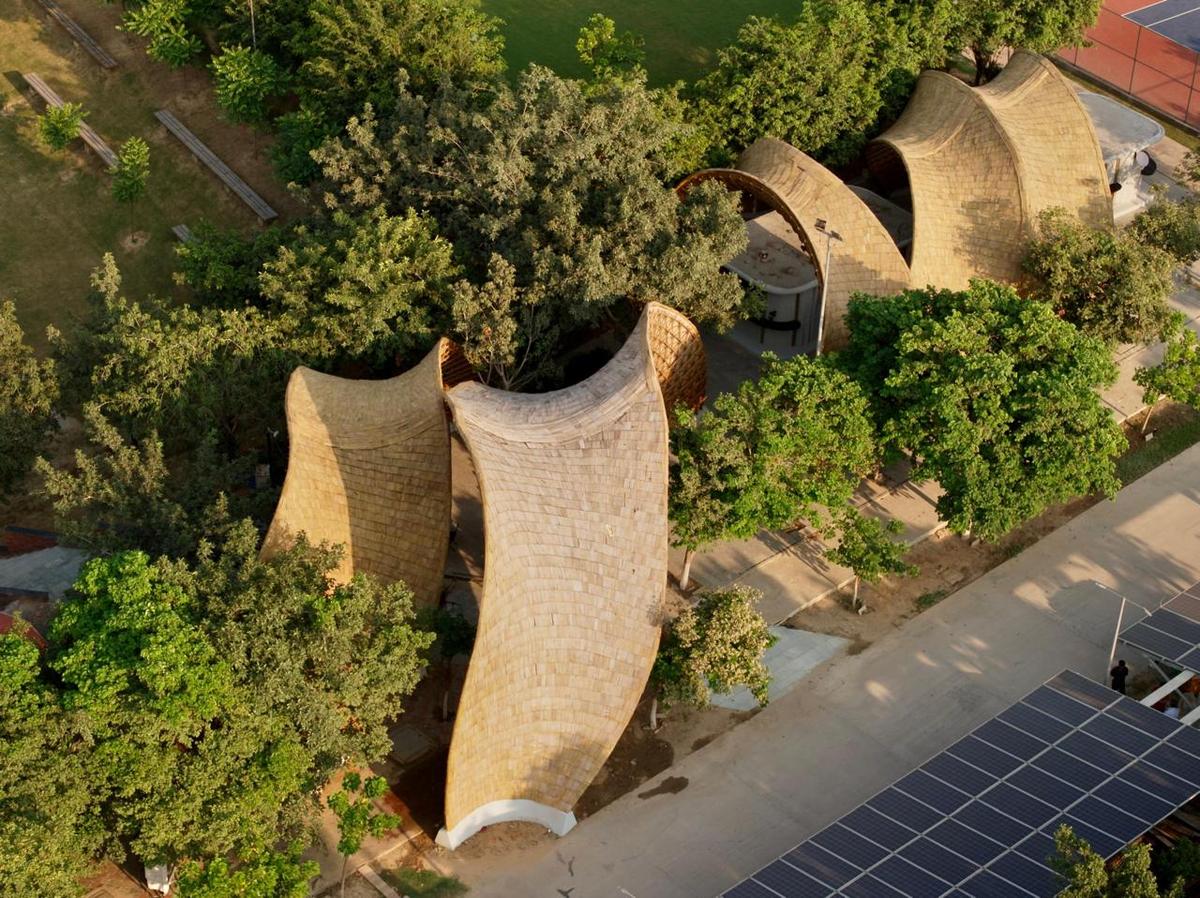
A view of The Hungry Caterpillar challenge.
What are the ecological and social impacts of utilizing bamboo as a major materials in public or semi-public buildings, factoring in life cycle, native sourcing, artisan labour, upkeep, and end-of-life reuse?
Within the case of The HungryCaterpillar, the handled bamboo used helped sequester almost 350 tons of CO₂, which is a direct constructive influence. In contrast to metals or concrete, which have excessive embodied vitality and are troublesome to recycle at end-of-life, bamboo could be repurposed, composted, or safely returned to the soil. Socially, bamboo building depends on craftsmanship and hands-on ability, which opens alternatives for artisan labour. What excites me is the dialogue it fosters, between designers, artisans, and sustainability consultants, which makes the method as useful as the end result.
How do designs just like the Caterpillar’s double-curved bamboo shells or the Koodaaram’s (the acclaimed pavilion at Kochi Biennale’s 2018 version) porous but protecting kind mediate between shelter and openness?
Each buildings discover the fragile steadiness between safety and permeability. The double-curved shells of the Caterpillar create shaded, cocoon-like interiors whereas remaining porous sufficient to let in dappled gentle, air motion, and a way of reference to the encircling bushes. In each circumstances, the shape symbolises inclusivity: creating areas that invite gathering and reflection, but with out severing ties to the skin world.
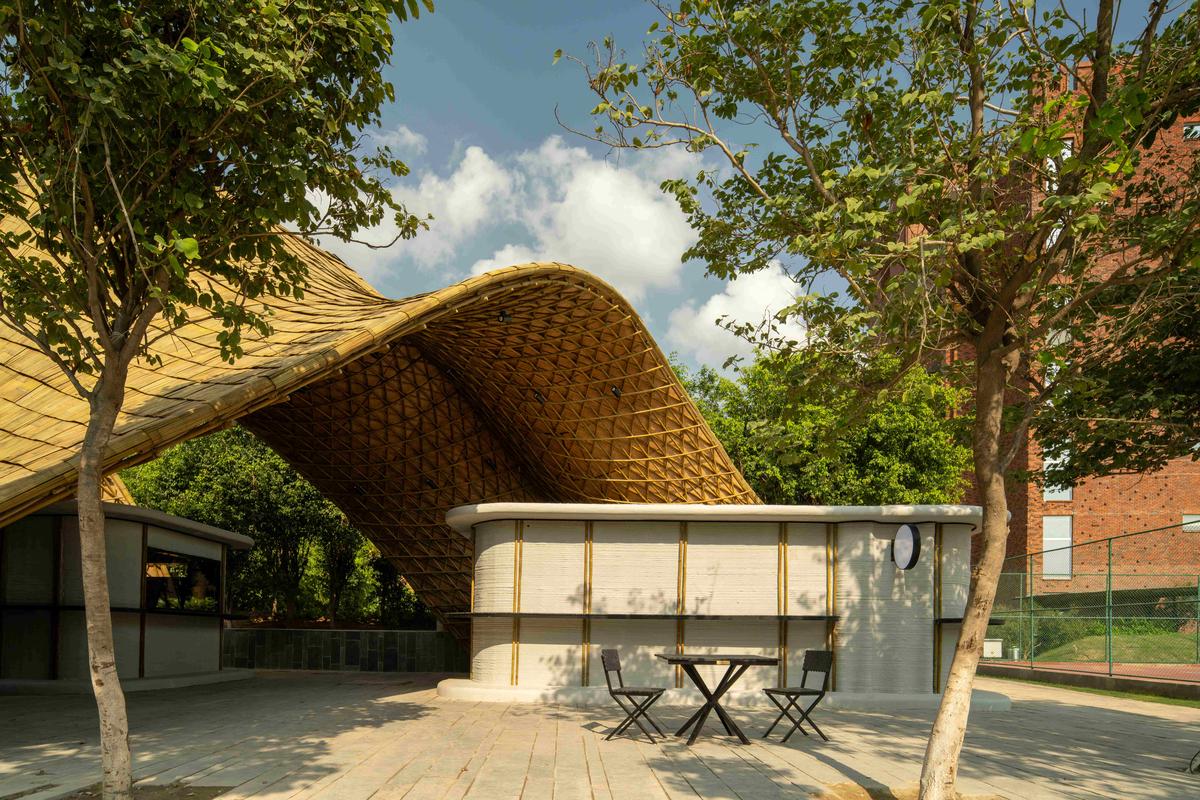
A view of The Hungry Caterpillar challenge.
Inform us extra in regards to the inspiration, the standard of bamboo used and longevity?
The challenge took form from a hanging picture that stayed with me after my first go to to the location: a cocoon tucked into the inexperienced cover, harking back to a caterpillar feeding securely, sheltered and within the strategy of turning into. Bamboo was the right medium to deliver this imaginative and prescient alive. Its versatility permits for daring, expressive geometries whereas protecting the footprint gentle on the planet.
What has been the response?
From the outset, Ashoka College has been encouraging and aligned with the imaginative and prescient of making a student-centric area that champions sustainability.
What stands out for you from different examples of bamboo installations (Koodaaram, or designer Sandeep Sangaru’s work)? How can different architects be inspired to observe go well with?
At Kochi’s Cabral Yard, the bamboo pavilion grew to become a logo of group and tradition, reworking an bizarre area into an iconic Biennale expertise. Sandeep Sangaru’s work, alternatively, demonstrates the fabric’s adaptability to furnishings and product design, proving that bamboo could be each native and up to date without delay. The extra we create alternatives for collaboration with engineers, artisans, and sustainability consultants, the extra confidence the occupation will achieve in embracing it as a mainstream materials.
Printed – September 26, 2025 05:28 pm IST



:max_bytes(150000):strip_icc()/HDC-GettyImages-668641904-9179dc9fe60446d8b4d8a08fbffcf46d.jpg?w=600&resize=600,400&ssl=1 "What Happens When You Combine Turmeric and Black Pepper")


:max_bytes(150000):strip_icc():format(jpeg)/Health-GettyImages-1484341547-2b72e64020e84487bb504cbe25299d4e.jpg?w=600&resize=600,400&ssl=1 "What To Know About Vaginal Steaming")

Recent Comments