


Slowing down feels countercultural in a world that’s all the time telling teenagers to do extra, purchase extra, sustain extra. The feed by no means stops, the traits by no means wait, and by some means there’s all the time one thing new you’re imagined to need.
So what if probably the most radical factor you may do proper now… was simply decelerate?
Gradual consumption. Sounds apparent, proper? However this easy phrase is hiding one of many largest local weather options in plain sight — and it has nothing to do with giving issues up.
This isn’t one other “use much less, save the planet” lecture. No guilt, no lists, no finger-wagging. That is truly about one thing higher, dwelling lighter. Much less chaos, much less strain, much less I would like this proper now. Extra of the stuff that truly feels good.
Consider it as unlocking your “I don’t care” period. Not the checked-out type. The type the place you’ve quietly found out that chasing each pattern, each drop, each haul — is exhausting. And non-compulsory.
When you crack that code? You’re not simply dwelling higher. Seems, you’re additionally doing extra for the planet.

Illustration by Soumyadip Sinha
In case your wardrobe might speak, it could be exhausted
Let’s begin with one of the vital overconsumed markets on the market: garments.
You open your wardrobe and by some means, regardless of proudly owning extra garments than you’ve ever owned in your life, you don’t have anything to put on. So that you scroll. You see a haul video. Somebody’s unboxing these stylish outfits. It appears to be like enjoyable and simple. You add three issues to your cart.
That’s quick vogue doing precisely what it was designed to do.
Quick vogue is clothes made cheaply and shortly to match no matter’s trending proper now, designed to be purchased on impulse, worn a handful of occasions, and forgotten. The second you’ve worn it, there’s already one thing new to interchange it. That’s not a coincidence. That’s the enterprise mannequin.
Some estimates counsel many clothes, particularly trend-driven ones, are worn solely a handful of occasions earlier than being discarded.
Artificial materials add one other layer to the issue. A polyester garment can take many years to centuries to interrupt down, lingering in landfills lengthy after it’s been discarded.
However right here’s the shift: rewearing the identical few items isn’t a limitation. Selecting secondhand isn’t falling behind. It’s merely stepping out of a cycle that’s constructed on fixed substitute—and deciding what’s truly value retaining.
Meals for thought, actually
Now let’s discuss one thing even nearer to your each day life: what you eat. Or extra particularly, the way it will get to you and what occurs to half of it.
Globally, about one-third of all meals produced is misplaced or wasted. When meals leads to landfills, it may possibly launch methane, a greenhouse gasoline considerably stronger than CO₂. This makes meals waste a serious contributor to emissions.
Gradual consumption right here doesn’t require drastic modifications. It’s easier than that.
It appears to be like like cooking what’s already in your kitchen. Shopping for a little bit extra deliberately so meals doesn’t go to waste. Utilizing leftovers as an alternative of discarding them.
Small shifts, however significant ones, for each the planet and your each day life.
That’s it. That’s the local weather motion. It simply occurs to even be probably the most peaceable a part of your week.
We requested the individuals who truly stay this
Speaking about gradual consumption is one factor. Residing it’s one other. So we went to 2 individuals who’ve made it their life’s work — one who explains the science, and one who proves it’s doable each single day.
“You don’t have to repair every little thing”
Pankti Pandey, an ex-ISRO scientist, educator, and local weather advisor who additionally runs ‘ZeroWasteAdda’, begins by stripping the panic out of it.
Each product you’ve ever purchased has a narrative earlier than it reaches you — uncooked supplies extracted, vitality burned to make it, vans and ships to maneuver it, and finally, a landfill ready for it. Gradual consumption, she explains, is just about slowing that complete chain down.
“If you purchase much less and use issues longer, fewer sources are extracted, much less vitality is used, fewer emissions are launched,” she says. “Your position shifts from ‘I’ve to repair every little thing’ to ‘I can scale back the velocity of the issue by way of my selections.’”
That reframe alone is value sitting with. You’re not liable for fixing local weather change. However your selections do join — straight — to how briskly the issue strikes.
So the place do you truly begin? Pankti’s recommendation is disarmingly easy. Don’t inform your self to purchase much less. Simply delay.
“In the event you see one thing you want, wait two days. More often than not, the joy fades. If it doesn’t, you already know it’s one thing you genuinely need.”
Similar logic applies to every little thing you already personal. End the shampoo earlier than shopping for a brand new one. Put on the identical outfit once more — restyle it, personal it. Make one more sensible choice a day. That’s it. No grand gesture required.
And on the concept that sustainable dwelling is pricey? She doesn’t purchase it — actually.
“Sustainability being costly is definitely a delusion. It begins to really feel costly solely after we scale back it to purchasing ‘inexperienced’ merchandise. Sustainability just isn’t about what you purchase. It’s about the way you suppose.”
“Thrifting is only a hand-me-down from a stranger”
That very same thought reveals up in a extra private means by way of Nayana Premnath—an architect inspiring over hundreds Indians to stay extra sustainably. By means of her platform and upcycling model The Inexperienced Circle, she’s displaying how small, conscious selections can spark larger change.
Nayana didn’t plan to grow to be a voice for sustainable dwelling. She studied structure due to Laurie Baker — a builder from her hometown recognized for setting up sustainably. Her dissertation was on mud structure. Even then, she says, it wasn’t structure for structure’s sake.
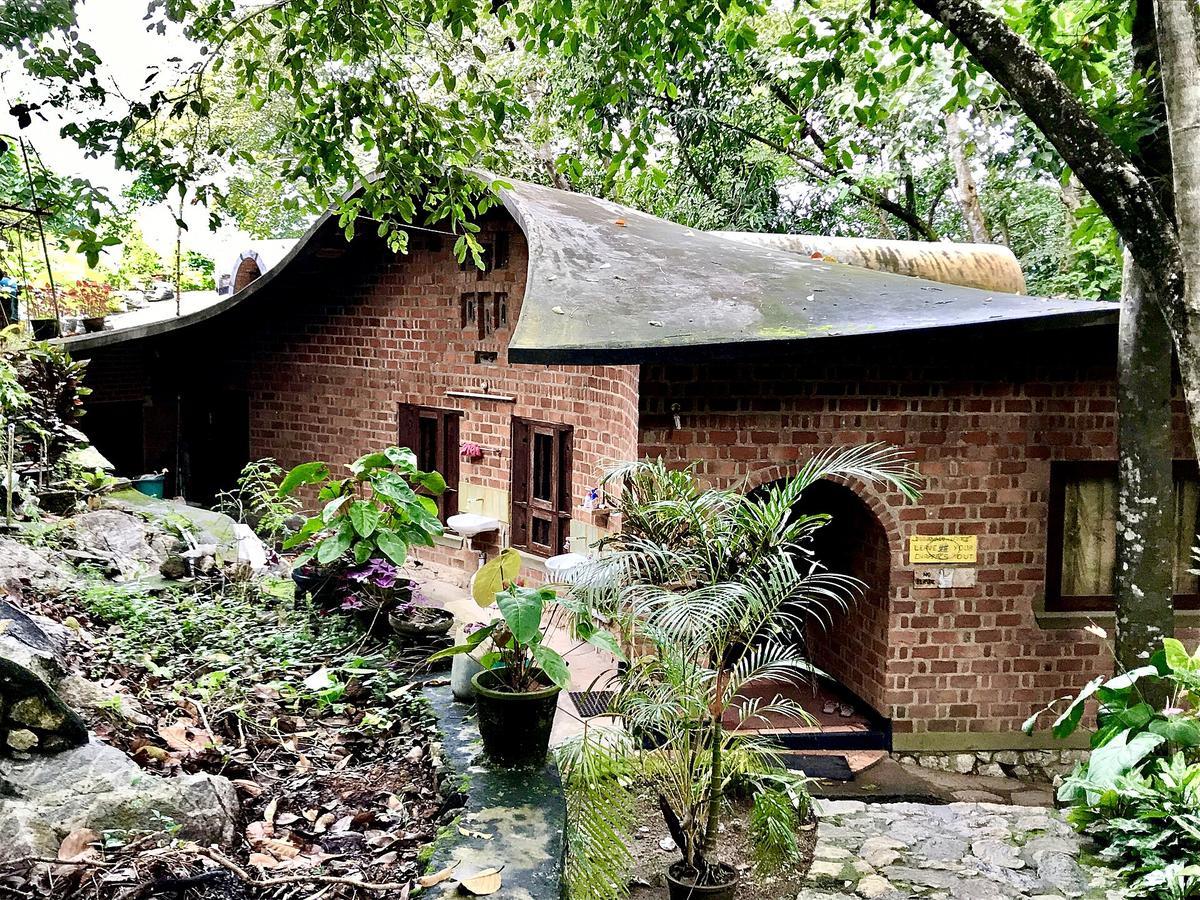
Vernacular Buildings in Laurie Baker Workshop
| Picture Credit score:
Picture: Wikimedia Commons
When she began working, there have been virtually no sustainable companies to affix. So she left, stumbled onto YouTube, tried singing, realised it wasn’t her factor — and someplace in that wandering, one thing clicked.
“The factor you retain coming again to, even throughout completely different careers and completely different phases of your life — that’s in all probability your actual reply,” she says. For her, that factor was all the time sustainability.
Immediately, her complete life runs on that precept — from her bamboo toothbrush to what she eats for breakfast to how she will get across the metropolis. None of it dramatic. All of it deliberate.
On vogue, she makes some extent that’s arduous to argue with.
“India has all the time had a tradition of hand-me-downs. Thrifting is de facto only a hand-me-down from a stranger.” If you body it that means, she says, it stops feeling like a sacrifice and begins feeling acquainted.
And she or he’s optimistic about youngsters particularly — greater than most individuals give them credit score for.
“If you clarify quick vogue’s precise influence, with out lecturing, with out the preachy tone — they get it. And as soon as they get it, they’ll in all probability be louder about it than us.”
Her sensible recommendation earlier than any buy: ask your self three issues. Do I really want this, or do I simply need it proper now? Can I borrow it? Can I discover it secondhand? Three questions. That’s the entire system.
“The aim isn’t to be good. It’s to be aware. When you shift from autopilot to really fascinated about your selections, even the imperfect ones really feel completely different — since you made them on goal.”
The machine in your pocket can be the issue
Let’s speak concerning the one factor you’re in all probability holding proper now: your telephone.
Not since you use it an excessive amount of—however due to what it takes to make it, and what occurs if you substitute it.
Most telephones are upgraded each couple of years, typically not as a result of they’ve stopped working, however as a result of one thing newer is offered. A greater digital camera, a brand new characteristic, a well-timed advert—and immediately, what you’ve got feels outdated.
However the actual value isn’t simply monetary. A single smartphone comprises over 60 completely different parts, together with uncommon minerals. Its manufacturing is energy-intensive, and globally, solely about 20% of e-waste is formally recycled. The remainder—outdated telephones, earbuds, chargers—finally ends up as waste.
The gradual consumption shift right here is straightforward: use it longer. Even extending a tool’s life by a yr can considerably scale back its environmental influence.
The identical applies throughout devices. Earlier than changing one thing, ask: is it truly damaged—or does it simply really feel outdated?
Not simply what you purchase
Right here’s the half we not often discuss: digital consumption.
The identical “extra, quicker, now” vitality that fills your wardrobe with unworn garments and your desk with devices you’ve forgotten about — it additionally runs your display screen time. The countless scroll. The autoplay that decides you’re not completed but. The notification that pulls you again in earlier than you’ve even processed the very last thing you noticed.
This isn’t about display screen time being dangerous. It’s about the identical senseless autopilot, the one Nayana talks about — taking part in out in your telephone as a lot as in your buying cart.
Gradual consumption, at its core, is about selecting. Actively, on goal, as an alternative of simply going together with regardless of the algorithm serves subsequent. That applies to what you watch, what you learn, what you observe, simply as a lot as what you purchase.

Picture: Getty Photos/iStockphoto
If you select to look at one factor correctly as an alternative of half-watching six, if you observe accounts that make you are feeling like sufficient as an alternative of such as you’re lacking out — that’s gradual consumption too. Quieter. Much less seen. However the identical muscle.
Your unbothered period
So right here’s the place we land.
Gradual consumption isn’t a character sort or an aesthetic. It’s not one thing you construct an identification round. It’s only a small shift — from going together with every little thing to really selecting.
It appears to be like like ready two days earlier than shopping for one thing you immediately need. Ending the shampoo. Rewearing the outfit. Consuming the mango earlier than it goes dangerous. Conserving the telephone a little bit longer. Watching one thing you truly picked.
None of those are sacrifices. They’re simply choices, small ones that quietly add up.
As Pankti places it, sustainability is a mindset, not a buying class. And Nayana says it merely: “The aim isn’t to be good. It’s to be aware.”
That’s actually all it’s. Simply transferring by way of your day a little bit extra on goal, and rather less on autopilot.



:max_bytes(150000):strip_icc()/HDC-GettyImages-668641904-9179dc9fe60446d8b4d8a08fbffcf46d.jpg?w=600&resize=600,400&ssl=1 "What Happens When You Combine Turmeric and Black Pepper")


:max_bytes(150000):strip_icc():format(jpeg)/Health-GettyImages-1484341547-2b72e64020e84487bb504cbe25299d4e.jpg?w=600&resize=600,400&ssl=1 "What To Know About Vaginal Steaming")

Recent Comments